
A backyard gathering for 15 people is easiest when you plan the space before the decorations. Start with seating, a practical food station, shade, and a weather backup. This guide shows how to plan a casual two-and-a-half-hour get-together with a seven-day timeline, an illustrative budget, and an easy checklist.
Start with the people, not the party decorations
Imagine 15 guests with different needs: someone may prefer shade, another may need a seat with a back, and a child may need active adult supervision. Ask about mobility, dietary needs, and arrival logistics ahead of time without making anyone explain private information. Choose one clear occasion, such as an afternoon neighborhood gathering, rather than trying to build a miniature festival.
Five decisions before sending invitations
- Guest limit: Pick a number your yard and indoor bathroom access can comfortably support.
- Time window: A defined start and finish helps you plan food, noise, and lighting.
- Weather decision: Choose now what happens if rain, wind, poor air quality, or extreme heat makes outdoor hosting uncomfortable.
- Food approach: Decide between cold snacks, a simple prepared meal, or food made by a licensed provider.
- Spending limit: Decide what you can spend before purchasing temporary decorations or extra furniture.
A practical backyard layout for 15 guests
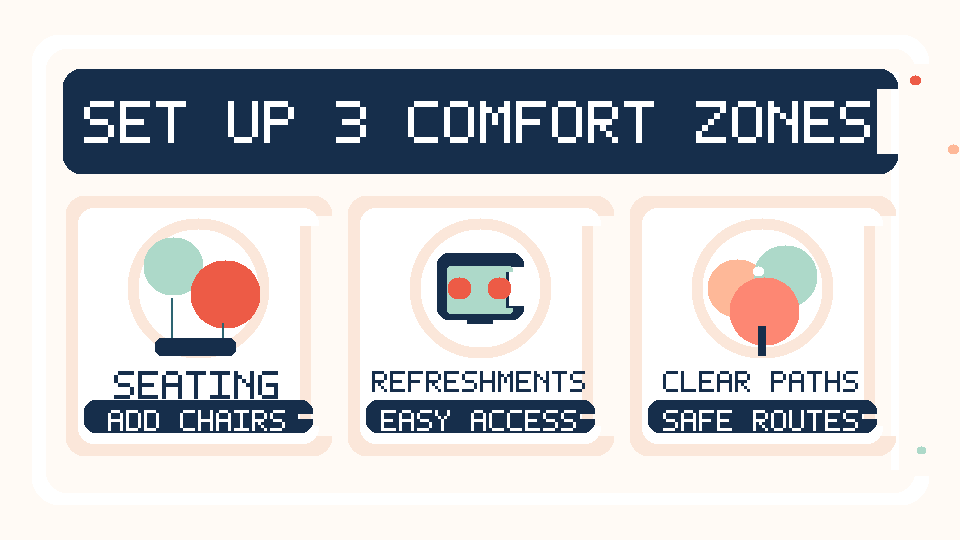
Think of the yard as a few simple zones rather than one large party table. Keep the routes between them open and consider surfaces that may be uneven or slippery.
| Zone | Plan | Why it helps |
|---|---|---|
| Seating | Arrange comfortable places for all expected guests, with space for mobility needs | Guests can relax without standing throughout the event |
| Food and drinks | Use one serving surface and a separate area for drinks if room allows | Avoids a crowded queue and helps with supervision |
| Conversation | Create smaller seating groups instead of one distant circle | Makes it easier for guests to interact |
| Shade and shelter | Identify existing shade and a safe weather alternative | Keeps the plan flexible |
| Waste and supplies | Put bins, napkins, water, and spare bags within reach | Reduces trips through the house |
If you borrow chairs, inspect them for stability and place them on firm ground. Avoid obstructing doors, steps, and exits. Temporary tents or umbrellas should follow the manufacturer’s installation and weather restrictions; do not use them in conditions where they are unsafe.
Sample budget for a 15-person backyard gathering
These are illustrative spending targets in U.S. dollars, not market prices. Your actual costs depend on location, what you own, and whether you buy, borrow, or rent supplies.
| Item | Planning allowance | How to save |
|---|---|---|
| Simple food and snacks | $65 | Serve a short menu with clear portions |
| Drinks and ice | $24 | Offer water and one other nonalcoholic option |
| Basic decorations / borrowed-item costs | $25 | Use reusable décor and borrowed furniture where practical |
| Plates, napkins, serving items | $16 | Use existing reusable supplies when hygienic |
| One casual activity | $10 | Choose a low-cost game or conversation prompt |
| Reserve for last-minute needs | $30 | Do not commit the reserve in advance |
| Illustrative total | $170 | About $11.33 per guest at 15 guests |
If chairs, tables, a canopy, or catering must be rented, this example likely understates the cost. Collect actual vendor quotes and check delivery, setup, damage, and cancellation policies before agreeing to a rental.
Make the weather decision in advance
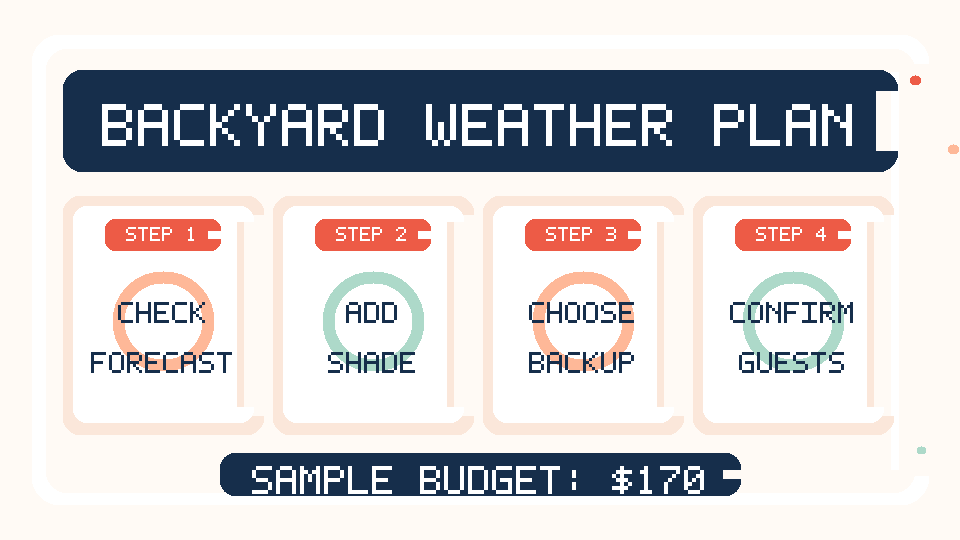
- Pick a decision deadline: For example, decide the night before whether the outdoor plan remains practical, then reassess on the event day.
- Check local authoritative forecasts: Review expected rain, wind, heat, and any official alerts rather than relying only on a weather icon.
- Choose a realistic backup: Could the guests comfortably fit indoors? If not, identify a different venue or a postponement policy.
- Communicate clearly: Tell guests when you will make the final weather decision and how you will notify them.
Do not assume that a temporary canopy makes an outdoor event safe during severe weather. Follow official local guidance for dangerous conditions, and keep access routes clear.
Seven-day backyard party timeline
| When | Priority | Short task |
|---|---|---|
| 7 days ahead | People | Confirm date, guest count, accessibility needs, and RSVP method |
| 5–6 days ahead | Space | Map seating zones and identify weather alternative |
| 3–4 days ahead | Food | Choose a manageable menu; check serving equipment |
| 2 days ahead | Supplies | Gather chairs, bins, plates, and shade equipment |
| 1 day ahead | Weather | Review forecast and communicate if your plan may change |
| Event day, early | Setup | Check the yard, safe paths, seating, drinks, and hygiene |
| After the event | Reset | Store leftovers safely, return borrowed items, and clean up |
A two-and-a-half-hour schedule
- 0:00–0:25: Greet guests, offer drinks, and help them find comfortable seats.
- 0:25–1:10: Serve food and leave ample space for conversation.
- 1:10–1:40: Offer one optional activity or allow guests to mingle.
- 1:40–2:10: Share dessert or a toast, if appropriate to the occasion.
- 2:10–2:30: Wind down and thank guests without rushing their departure.
Checklist to use before guests arrive
- Guest list, RSVPs, directions, parking or transit advice, and event end time confirmed.
- Comfortable seating for every guest and accessible routes checked.
- Bathroom and hand-washing access confirmed; water available.
- Any rain, wind, heat, or air-quality concerns reviewed against local guidance.
- Food allergies and dietary needs considered without making medical assumptions.
- Cold and hot foods handled according to current food safety guidance.
- Electrical cords, trip hazards, open flames, and children’s play areas checked.
- Trash bags, cleaning supplies, extra napkins, and backup lighting ready.
- Neighbors and building or community rules considered where applicable.
Three common mistakes
- Planning only the sunny-weather version: Prepare a genuinely workable indoor or rescheduling alternative.
- Using all the space for decorations: Prioritize clear pathways, water, seating, and bathrooms.
- Making the host cook throughout the event: Choose food that can be safely prepared or served with minimal last-minute work.
Frequently asked questions
How many chairs do I need for 15 people?
Plan a comfortable seat for every person who may want one, taking guest mobility and age into account. The exact mix of chairs, benches, and accessible seating depends on the group and the layout.
What if I do not have enough indoor room for a rain backup?
Avoid inviting 15 people on the assumption that severe weather will not happen. Arrange an alternate venue or agree on an easy reschedule option and communicate it beforehand.
Do I need a full meal?
Not always. Guests should know whether to expect a meal or light refreshments. What you serve should be appropriate for the time of day, the duration, and any dietary requirements.
Final takeaway
For a small backyard gathering, the most useful planning order is: guests, space, comfort, weather, food, then decoration. A clear backup and a simple checklist do more for hosting confidence than an elaborate party theme.
Editorial note: Cost and scheduling examples are illustrative. For weather hazards, food safety, fire restrictions, equipment installation, and local rules, check the current guidance for your location before hosting. Last reviewed October 9, 2026.
Related planning guides: Explore our family park picnic checklist and RSVP guest tracker for more practical next steps. Visual note: The images in this article are AI-generated illustrative concepts and do not depict an actual event documented by the site.
Keep planning: New to hosting? Visit our Start Here guide for an easy five-step plan, or browse Party Guides for more checklists and practical examples.

