A game night for eight friends is easier to host than an elaborate dinner party—if you choose activities that fit the room and your guests. This guide helps you plan an inviting two-and-a-half-hour evening with an illustrative budget, easy snack ideas, accessible seating, a simple schedule, and a no-stress backup plan.
The three choices that matter most
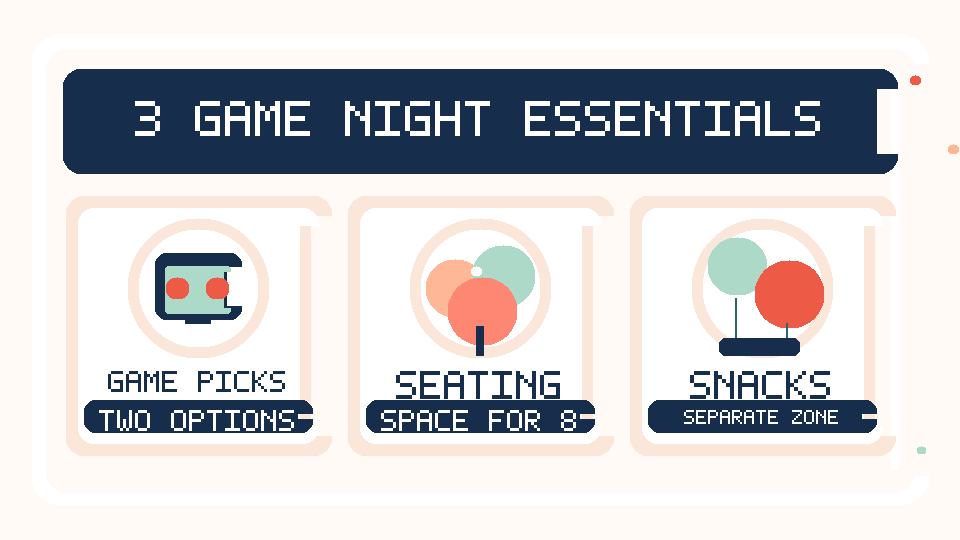
- Comfort: Arrange seats and a table that allow every guest to see the activity and participate without crowding.
- Game mix: Choose one easy warm-up activity and one main game; leave time for conversation.
- Food: Pick low-mess snacks and drinks that do not interrupt play or require constant cooking.
Before you invite anyone: find out what they enjoy
Do your guests prefer word games, cooperative puzzles, creative party games, or quiet conversation? Ask a short question when inviting people, rather than buying a game before checking their interests. If any guest has mobility, hearing, vision, or dexterity needs, choose activities that can be adapted without singling people out.
Choose a layout for eight people
A dining table may work for board and card games if everyone can reach the playing area. If your table comfortably seats only six, consider two smaller activity stations instead of squeezing in extra chairs. Use stable chairs, keep routes to doors and bathrooms clear, and place drinks on a separate surface to reduce spills.
| Space | Best use | Helpful detail |
|---|---|---|
| Main table | Cards, boards, or team activities | Leave room for instructions and easy reach |
| Side table | Drinks, napkins, and snacks | Keep liquids away from cards and devices |
| Conversation zone | Breaks and relaxed chatting | Avoid uncomfortable background noise |
| Entry area | Coats, bags, and shoes | Prevent blocked walking paths |
| Optional quiet corner | A short break from group activity | Make participation flexible |
An example $140 budget for eight guests
These figures are hypothetical planning allowances, not store quotes, recommended prices, or national averages. The total assumes you already have seating and at least one playable activity.
| Item | Sample allowance | Adaptation |
|---|---|---|
| Snacks and light finger foods | $45 | Choose a few easy options |
| Nonalcoholic drinks and ice | $22 | Provide water and one extra drink choice |
| Dessert or fruit | $18 | Choose one treat |
| Napkins and disposable supplies | $10 | Use washable supplies if practical |
| Game or activity supplies | $15 | Borrow or reuse existing games |
| Contingency | $30 | Keep as an unspent buffer |
| Planning total | $140 | $17.50 per expected guest |
Your budget may be much lower if everyone brings a snack or you use pantry items. Before assigning food, check for allergies and dietary preferences. Guests should know whether you plan to offer a light snack or a meal.
A two-and-a-half-hour game-night schedule
| Time | Activity | Host tip |
|---|---|---|
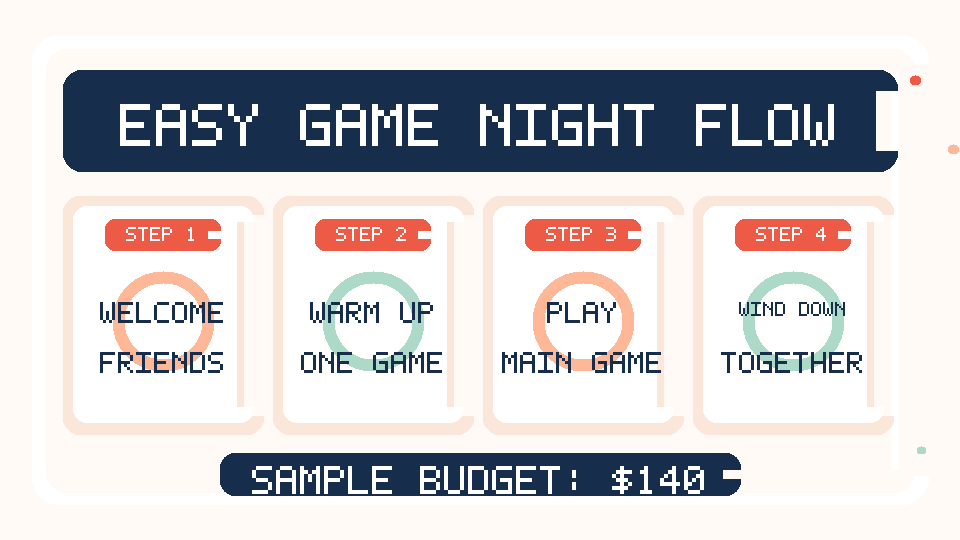
| 0:00–0:20 | Welcome guests and let them settle in | Show where drinks and bathrooms are |
| 0:20–0:40 | Play a quick low-pressure icebreaker | Explain rules in two minutes |
| 0:40–1:30 | Enjoy the main game | Offer a practice round for newcomers |
| 1:30–1:45 | Take a snack and stretch break | Check everyone’s comfort |
| 1:45–2:15 | Switch teams or choose a shorter game | Let guests opt out without awkwardness |
| 2:15–2:30 | Wind down and chat | Finish with time for an unhurried departure |
Selecting games without a complicated rulebook
- Explain the objective first. A guest should know what they are trying to accomplish before hearing every exception.
- Keep the first round forgiving. An optional demonstration round prevents one person from becoming the rules expert all evening.
- Build in natural pauses. Guests who arrive later or prefer conversation can join at a reset point.
- Have a zero-equipment option. Word association, storytelling prompts, or a team quiz can replace a missing game piece.
- Do not force competition. Offer cooperative or team-based alternatives for mixed groups.
Food setup that works during games
Keep sticky or crumbly foods away from the main playing surface. Put napkins and water where guests can find them and store foods at appropriate temperatures. Do not leave perishable items out for the entire evening; follow current food-safety guidance for the foods you serve. Choose a menu that keeps the host involved in the gathering instead of preparing dishes throughout the night.
Seven-day preparation checklist
- 7 days before: Confirm the date, duration, guest list, and general game preferences.
- 4–5 days before: Test the seating layout and choose a main and backup activity.
- 2–3 days before: Plan refreshments, verify dietary needs, and gather supplies.
- 1 day before: Charge devices if needed, check game pieces, and tidy the play area.
- Event day: Set out cups, snacks, towels, trash bags, and an easy-to-see schedule.
Accessibility and inclusion checklist
- Offer a mix of visual and spoken instructions where practical.
- Check whether small text, small game pieces, time pressure, or loud music could be barriers.
- Make participation and breaks voluntary.
- Provide a comfortable chair and adequate lighting for every guest.
- Consider a screen-free option for guests who do not wish to use a phone.
Four mistakes that make hosting harder
- Scheduling more games than anyone can finish. Two flexible activities are usually a better starting point than five fixed rounds.
- Keeping every snack at the game table. A side table protects the playing area and reduces disruptions.
- Assuming guests share the same experience level. Choose accessible rules and invite beginners into a practice round.
- Making a budget depend on one special purchase. Plan around what you own first and borrow when appropriate.
Frequently asked questions
How many games should I prepare for a short evening?
Choose one warm-up and one main activity, with one spare option in case the group prefers something else. The number of rounds matters less than whether everyone can participate comfortably.
Should I serve dinner?
Dinner is optional. Be clear about the timing and food expectations in your invitation. A late-evening gathering might work with light snacks, but guests should know in advance.
What if someone dislikes group games?
Make it socially acceptable to chat, observe, or sit out a round. A welcoming host leaves room for different energy levels.
Final checklist before guests arrive
- All eight guests have a comfortable seat.
- Games are complete and rules are easy to explain.
- Water, snacks, napkins, and bins are accessible.
- Guest dietary and accessibility needs are considered.
- The event has a flexible ending time and backup activity.
Editorial note: Dollar figures are illustrative examples, not verified current prices. Recheck local prices, equipment instructions, venue rules, and any current food safety guidance relevant to your gathering. Last reviewed October 9, 2026.
Related planning guides: Explore our guest RSVP tracker and party budget worksheet for more practical next steps. Visual note: The images in this article are AI-generated illustrative concepts and do not depict an actual event documented by the site.
Keep planning: New to hosting? Visit our Start Here guide for an easy five-step plan, or browse Party Guides for more checklists and practical examples.

