
A small gift exchange should be about sharing a fun moment, not pressuring people to spend money. With 12 participants, a clear price range and simple rules make the gathering easier to enjoy. This guide explains three exchange formats, a sample gift cap, an organizer checklist and wording you can copy.
Agree on participation and spending before the invitations
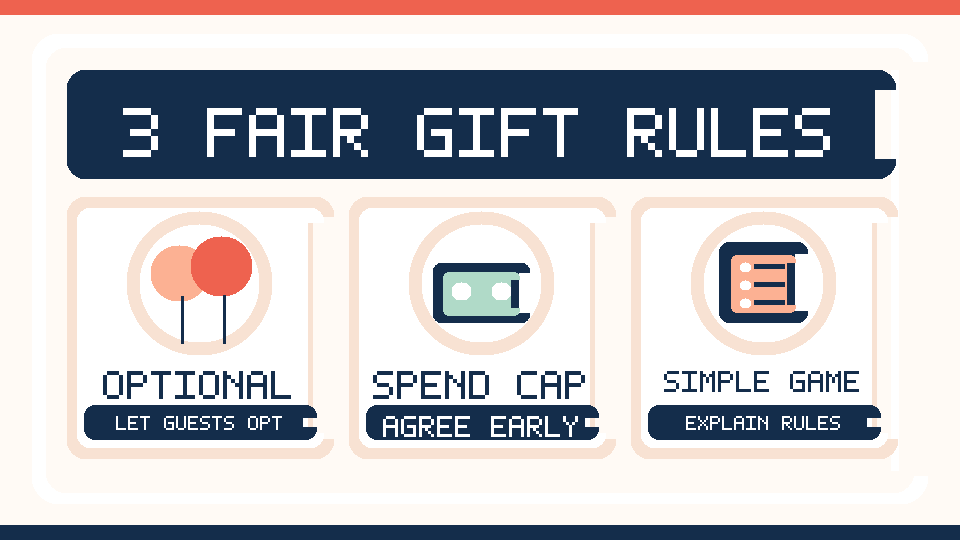
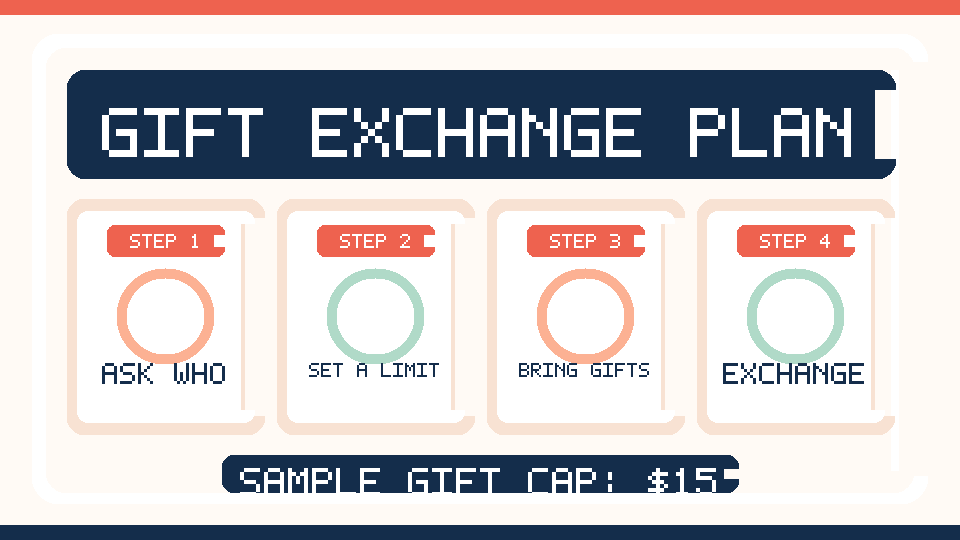
Ask whether guests want to participate and how much they feel comfortable spending. A sample limit of up to $15 per gift is a fictional planning option, not a national average or recommended amount. Guests should be able to attend the party without buying a gift if they prefer. Make the exchange optional rather than a condition of inclusion.
Choose a simple exchange format
| Format | How it works | Best when |
|---|---|---|
| Secret exchange | Each participating person receives one recipient’s name privately | Guests know each other well |
| Random wrapped gift | Each participant brings one wrapped item and receives one | Group wants low-prep fun |
| White elephant-style swap | Participants pick and optionally trade gifts under agreed rules | Group enjoys a playful game |
For a white elephant-style game, clarify whether trades are allowed, how often, and whether a turn limit applies. Explain those rules before the event. Be cautious about novelty gifts that could embarrass or exclude someone.
Gift-count example for 12 participants
When exactly 12 people opt in and each brings one gift, the group starts with 12 gifts. If only nine guests opt in, plan for nine gifts—not 12. Do not pressure the other three people to contribute. Decide what happens if someone cancels after pairings have been assigned.
| Scenario | Participants | Gifts required |
|---|---|---|
| Everyone opts in | 12 | 12 |
| Three people opt out | 9 | 9 |
| One participant cancels | 11 | Check exchange format and adjust |
| One guest forgot a gift | Depends | Use an agreed alternative; do not shame the guest |
Host-only budget example
The numbers below are hypothetical U.S. dollar allowances for hosting the gathering and do not include gifts purchased by attendees.
| Category | Illustrative allowance | Note |
|---|---|---|
| Snacks | $28 | Short menu for a casual gathering |
| Water and drinks | $17 | Include nonalcoholic options |
| Extra wrapping and labels | $10 | Ask guests to bring wrapped gifts |
| Reserve | $15 | For unexpected host supplies |
| Host-only total | $70 | Guest gifts excluded |
Simple invitation wording
Join our optional gift exchange! We’re having a relaxed get-together on [date] from [time] to [time]. If you’d like to join the gift exchange, please bring one wrapped gift with a spending cap of [amount] and let us know by [deadline]. You’re very welcome to come and socialize even if you’d rather skip exchanging. We’ll explain the simple rules when we meet.
Fairness and inclusion tips
- Make the gift cap clear and keep participation voluntary.
- Avoid gifts that rely on personal assumptions about identity or beliefs.
- Choose widely usable items if recipients are randomly assigned.
- Don’t collect sensitive preference information unnecessarily.
- Explain any rules for exchanging or trading gifts in advance.
- If children are attending, use age-appropriate and clearly supervised activities.
A two-hour party timeline
| Time | Activity | Tip |
|---|---|---|
| 0:00–0:20 | Welcome guests and collect optional gifts | Count before starting |
| 0:20–0:45 | Refreshments and conversation | Let nonparticipants enjoy the party |
| 0:45–1:20 | Gift exchange | Explain and follow agreed rules |
| 1:20–1:40 | Optional photos and dessert | Ask permission for sharing |
| 1:40–2:00 | Wind down and tidy | Keep departures relaxed |
Before the gathering checklist
- Confirm number of people joining the exchange.
- Check spending cap and whether handmade gifts count.
- Send date, address, RSVP and gift instructions privately.
- Choose and explain the exchange format.
- Provide a space for wrapped gifts and room to sit.
- Have a neutral plan for late cancellations or extra guests.
- Make it comfortable to participate without a gift.
- Clean up wrapping materials and check belongings after the event.
Common mistakes
- Announcing a price cap after guests have shopped.
- Making participation seem mandatory.
- Choosing rules too complicated to explain quickly.
- Forgetting to adjust the gift count after cancellations.
- Posting photographs of guests or gifts without asking.
Frequently asked questions
Does everyone need to spend exactly the maximum?
No. A cap is a ceiling, not an obligation to spend that amount. Clarify whether people may bring something homemade or choose not to participate.
What if someone arrives without a gift?
Handle it discreetly and kindly. They can enjoy the gathering without joining the exchange; you can also agree in advance on an organizer-supplied spare if that fits your budget.
Final takeaway
Keep the rules short, participation voluntary, and expectations clear. A thoughtful gift exchange should strengthen the gathering, not increase anxiety.
Editorial note: Gift cap and host budget are illustrative examples. Check actual local costs and consider participant preferences before organizing. Reviewed October 9, 2026.
Related planning guides: Explore our cookie swap party checklist and game-night hosting guide for more useful checklists. Image disclosure: Images in this guide are AI-generated illustrative concepts, not photographs documenting an actual event.
Keep planning: New to hosting? Visit our Start Here guide for an easy five-step plan, or browse Party Guides for more checklists and practical examples.

