
A Thanksgiving potluck works best when each guest knows exactly what to bring—and how the food will be served safely. For a casual 12-person get-together, the host should coordinate the menu, seating, timing, and storage space without trying to cook the entire meal. This guide offers a sample dish assignment plan, a host-only budget worksheet, a one-week timeline, and a food-safety checklist.
Decide the kind of Thanksgiving gathering you want
Not every Friendsgiving or Thanksgiving gathering needs a formal seated dinner. You might choose a shared buffet, a small sit-down meal, or an informal afternoon of sides and desserts. Ask guests about dietary restrictions and whether anyone will travel a long distance with food. Avoid scheduling a complex meal around the assumption that everyone’s dish will arrive hot.
Five things to confirm before requesting dishes
- Guest count: Count everyone, including children, before assigning amounts.
- Serving format: Seated dinner, buffet, or snacks and dessert.
- Dietary considerations: Ask about allergens, vegetarian options and other needs.
- Kitchen capacity: Check refrigerator shelves, outlets, warming equipment and counter space.
- Transport: Ask what can arrive ready to serve and what needs safe reheating.
A simple potluck assignment chart for 12 guests
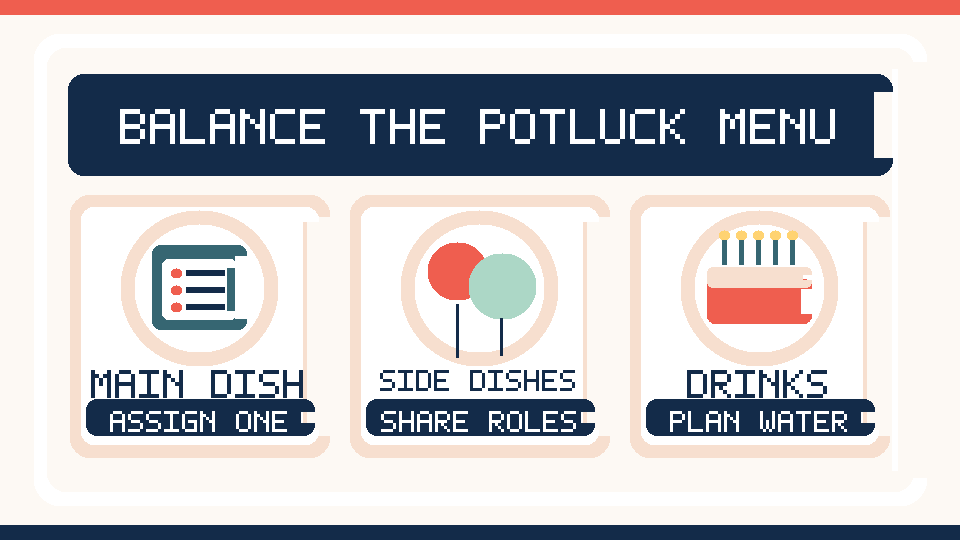
This is an example of how to divide responsibilities. Verify guest preferences, portions and kitchen space before assigning anyone a dish.
| Responsibility | Who might handle it | Organizer’s reminder |
|---|---|---|
| Main dish | Host or one confirmed volunteer | Specify who buys, cooks and transports it |
| Vegetable side | Guest A | Confirm number of servings and ingredients |
| Starch side | Guest B | Arrange safe holding or reheating |
| Salad or fresh side | Guest C | Keep chilled until serving if needed |
| Bread | Guest D | Bring ready to serve |
| Dessert | Guest E | Note allergens and utensils needed |
| Drinks and water | Host | Include enough nonalcoholic choices |
| Plates and cleanup | Host | Check what is already available |
Guests need not all prepare an elaborate dish. Someone traveling far may reasonably bring unopened drinks or bread. A guest with limited time or money can contribute in another way, such as helping with setup—if they wish.
Host-only budget example
The table below shows a hypothetical host allowance in U.S. dollars excluding food purchased by potluck contributors. It is not the cost of feeding 12 people entirely from the host’s budget, and it is not a national average.
| Host expense | Illustrative allowance | Notes |
|---|---|---|
| Main dish or host contribution | $65 | Depends on recipe, portions and ingredients |
| Nonalcoholic drinks and ice | $25 | Provide water and basic choices |
| Extra dessert or snacks | $20 | Optional if the menu is already complete |
| Serving supplies | $15 | Trays, foil, paper goods if needed |
| Simple table decor | $10 | Use reusable seasonal touches |
| Cleaning or storage supplies | $10 | Bags and leftover containers |
| Reserve | $25 | Cover missing items or unforeseen needs |
| Host-only total | $170 | Does not include guests’ spending |
One-week coordination timeline
| When | To do | Why it matters |
|---|---|---|
| 7 days ahead | Confirm guest count, start time and serving format | Sets the scale of the gathering |
| 5 days ahead | Assign specific dishes and serving amounts | Avoids duplicate desserts and missing vegetables |
| 3 days ahead | Check storage and serving equipment | Prevents last-minute counter congestion |
| 2 days ahead | Send transport and ingredient reminders | Supports food safety and dietary planning |
| 1 day ahead | Clear refrigerator space and lay out utensils | Makes arrivals easier |
| Event day | Verify temperatures, greet guests and coordinate service | Keeps the host from cooking all afternoon |
Avoid a crowded serving area
For 12 guests, one food serving line may be enough, with drinks set up separately. Keep trash and recycling bins easy to find. Confirm chairs and clear walking paths, especially if a guest carries hot food. Provide serving utensils for each dish and do not assume everyone wants to share the same utensil.
Food safety should be part of the invitation
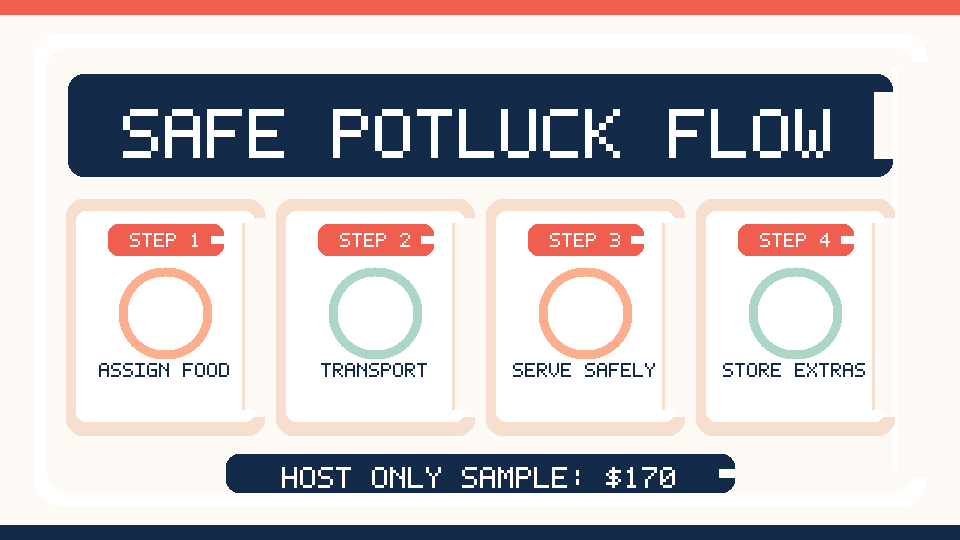
The FoodSafety.gov advises keeping hot food at 140°F or above and cold food at 40°F or below. Perishable foods left at room temperature beyond two hours should be discarded; when temperatures are above 90°F, the limit is one hour. Use smaller platters and replenish them with properly refrigerated food.
Ask guests to transport perishable foods with adequate temperature control. A cooler with ice can help with cold dishes. Do not use an improvised warming method that cannot keep hot food at a safe holding temperature. When in doubt, check current USDA guidance for the exact dish and method.
A relaxed three-hour get-together schedule
- 0:00–0:30: Welcome guests, take dishes to their correct holding areas, and offer drinks.
- 0:30–1:00: Set out ready-to-serve food and explain any allergen labels.
- 1:00–1:45: Eat together at a comfortable pace.
- 1:45–2:15: Enjoy dessert and optional shared gratitude or a simple conversation activity.
- 2:15–3:00: Visit, divide leftovers safely, and wind down.
Label food without making it complicated
Use a small card naming each dish and its main ingredients. Ask cooks to disclose known common allergens; ingredient cards are helpful but do not automatically make a dish safe for someone with a severe allergy. Avoid promising that a home kitchen or shared potluck surface is allergen-free unless this has been verified with the people responsible.
Host checklist you can copy
- Confirm guest count, arrival details and duration.
- Coordinate the menu so guests bring complementary dishes.
- Ask about food allergies and dietary needs.
- Make enough safe refrigerator and counter space.
- Identify equipment needed for safely keeping food hot or cold.
- Plan seating and clear access to entrances and bathrooms.
- Separate drink service from the main serving area.
- Prepare dish labels and individual serving utensils.
- Keep food storage time limits in view.
- Have extra bags and suitable leftover containers ready.
Common mistakes to avoid
- Everyone brings dessert: Assign categories and confirm contributions early.
- Cold dishes sit on the counter: Arrange refrigeration or ice instead.
- Every dish needs the oven: Check equipment needs before the day.
- No one knows the start time for eating: Share the serving target in advance.
- The host takes on all costs: Agree on contributions without pressuring guests.
Frequently asked questions
How many dishes do we need for 12 guests?
That depends on portion sizes and the meal style. Aim for a balanced set of main items and sides rather than a large number of small, redundant dishes. Confirm realistic serving amounts.
Should I tell people exactly what to bring?
It is usually helpful to assign a category and ask volunteers what is convenient for them. A collaborative list is kinder than surprising someone with an expensive assignment.
Can guests take leftovers home?
Yes, provided the food has been handled and stored safely. Provide appropriate containers and avoid distributing dishes that have spent too long at unsafe temperatures.
Final takeaway
For a relaxed 12-person Thanksgiving potluck, agree on the dish assignments, share clear arrival information, create a food-safe serving layout, and leave space to enjoy the people who came.
Editorial note: Cost amounts are hypothetical and exclude guests’ own purchases. Consult current official USDA food-safety guidance for specific foods and handling practices. Prepared October 9, 2026.
Related planning guides: Explore our cookie-swap sign-up and food labeling checklist and party budget worksheet for more practical next steps. Image disclosure: The images in this article are AI-generated illustrations of possible setups, not photographs documenting a real event.
Keep planning: New to hosting? Visit our Start Here guide for an easy five-step plan, or browse Party Guides for more checklists and practical examples.

