
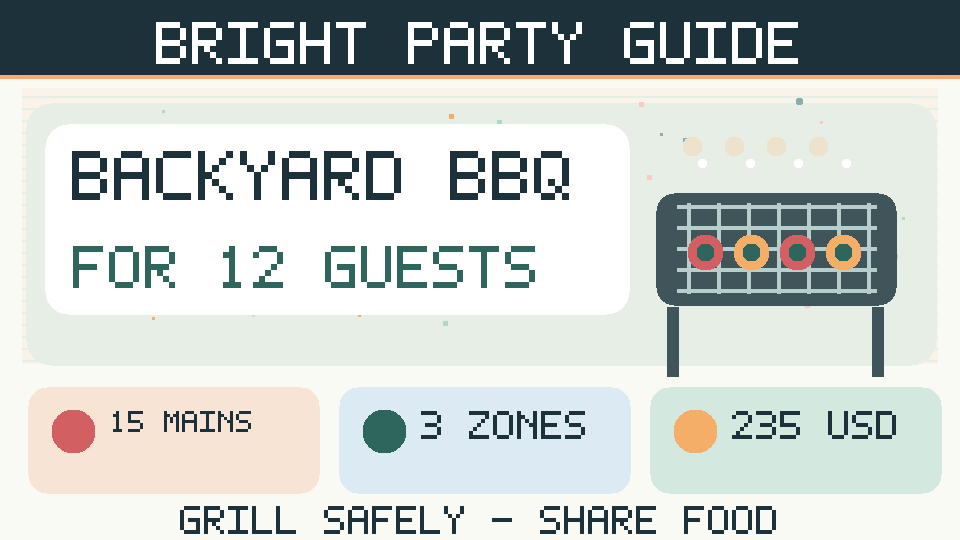
A backyard barbecue is enjoyable when the host is not trapped at the grill and the menu matches guests’ actual needs. This guide is specifically about grilling for twelve at a U.S. home—not the broader topic of decorating a backyard. It includes an example of fifteen main-course portions, two food options, a $235 hypothetical budget, a clear separation of raw and ready-to-eat food, a three-zone yard layout and a weather decision. The quantities are a flexible shopping model, not a prediction of what every guest will eat.
Confirm preferences before counting burgers
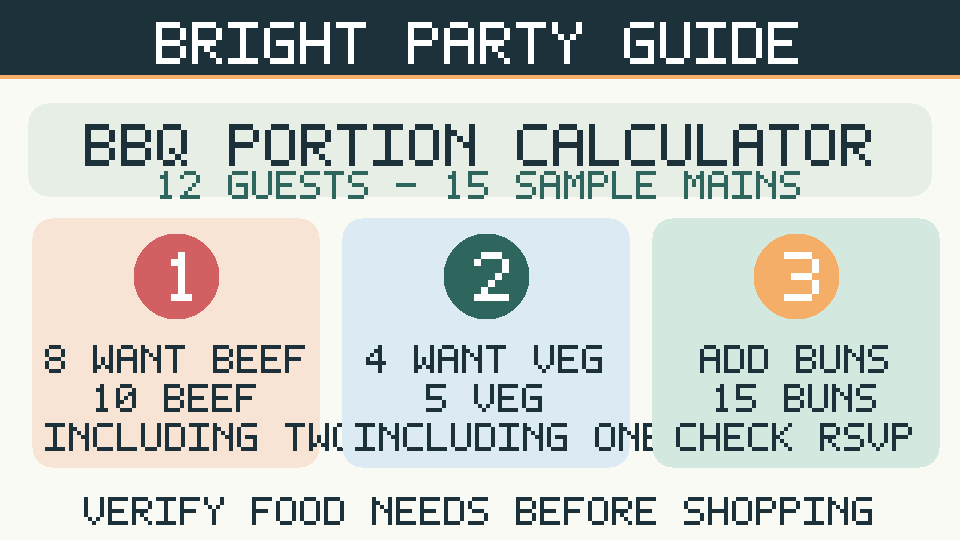
For a worked example, suppose eight of twelve people request beef burgers and four request a vegetarian main. Start with one main per person, then add three extra servings as a small flexible buffer: two additional beef burgers and one extra vegetarian patty. That produces ten beef burgers and five vegetarian patties, fifteen mains altogether. This ratio is only illustrative; if more guests choose vegetarian food or children need different portions, revise the list. Ask about allergies, religious food choices and dietary restrictions privately before buying ingredients.
Calculate buns, toppings and sides without overbuying
For fifteen sample burger portions, fifteen burger buns are an initial purchasing target if every patty is served in a bun. Check package sizes and any gluten-free requirements rather than buying by memory. Choose two sides such as a vegetable salad and a starchy side, plus fresh fruit if it fits the budget. Estimate each side’s portions from actual RSVP needs and serving size. Put toppings in small labeled containers and keep refrigerator capacity in mind before shopping for extra items.
A $235 illustrative shopping budget for twelve
The following dollar amounts are planning examples, not live market prices. The table assumes a host already owns a safe grill and enough seating. A grill rental, propane refill, parking fee or equipment replacement would change the total. Reserve money for actual unexpected necessities, not more decorative purchases.
| Host budget item | Example allowance |
|---|---|
| Beef burger patties | $52 |
| Vegetarian mains | $24 |
| Burger buns | $14 |
| Salad and sides | $35 |
| Fresh fruit | $18 |
| Nonalcoholic drinks | $26 |
| Toppings and condiments | $18 |
| Serving supplies | $13 |
| Reserve | $35 |
| Illustrative total | $235 |
Three zones for a safer, more comfortable yard
Zone one is an adult-controlled cooking area with clear distance between the grill, guest paths, combustible materials and the home as required by the manufacturer’s instructions and local rules. Do not allow children or pets into that zone. Zone two is a food-and-drink station separated from raw meat handling and placed in shade when appropriate. Zone three is a seating area with stable chairs, a clear restroom route and water within reach. Set a trash and recycling point away from the grill and food.
USDA temperatures that belong on the host checklist
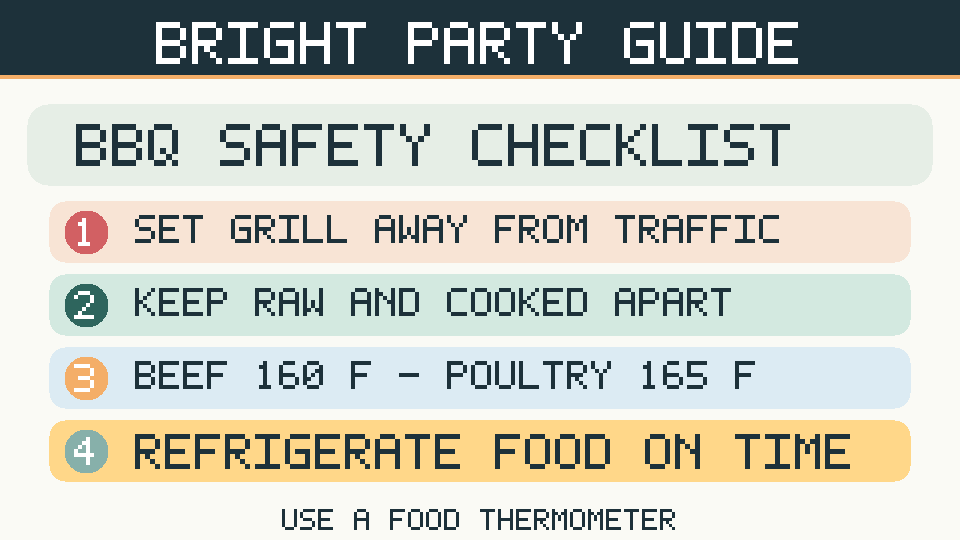
Use a food thermometer instead of relying on color. USDA guidance identifies 160°F as the safe minimum for ground beef burgers, 165°F for poultry and 145°F plus a three-minute rest for whole cuts such as steaks. The required temperature can vary by ingredient, so follow the relevant USDA chart, packaging and cooking guidance rather than treating all meat alike. Keep separate utensils for raw and cooked foods and do not put cooked burgers back on a plate that held raw patties.
Safe preparation and the outdoor holding limit
Thaw frozen food safely rather than leaving it on a patio table. Prepare salads and toppings with clean equipment, wash hands after handling raw foods and use a thermometer in the thickest appropriate portion. Hold cold perishable food at 40°F or below and hot perishable food at 140°F or above when serving for an extended period. Perishables left at room temperature for more than two hours should be discarded; reduce that to one hour if the ambient temperature exceeds 90°F. Keep small trays out and replenish safely rather than displaying the entire menu.
Choose the weather decision before invitations go out
Check the forecast 48 hours ahead and again on the morning of the event. Decide in advance what will happen during thunderstorms, extreme heat, strong wind or heavy rain. A covered outdoor space is not automatically safe for grill use; never bring a charcoal or propane grill indoors, into a garage or another enclosed area because of fire and carbon monoxide hazards. If the weather is unsafe, move only the guests and food to a suitable indoor plan while cooking by safe indoor methods, or reschedule. Send a clear update with enough travel time.
Invitation with menu and weather expectations
You’re invited to a relaxed backyard BBQ on [date], from [start] to [finish]. Please RSVP by [deadline] with your preferred main option and any allergies, dietary or access needs. We’ll offer grilled burgers, a vegetarian option, simple sides and nonalcoholic drinks. We will confirm the weather plan on [date/time]. No food contribution is required. We’ll share parking and access details privately. We look forward to seeing you.
Two-day prep timeline and three-hour party flow
Two days before: count twelve RSVPs and identify dietary needs. One day before: purchase supplies, clean the grill per the manufacturer’s guidance and set food-storage containers. Party day, 90 minutes before guests: check shade, chairs, handwashing supplies, thermometer and cooler. 0:00–0:30 welcome and drinks. 0:30–1:20 cook and serve in safe batches. 1:20–2:40 eat and visit. 2:40–3:00 refrigerate eligible leftovers, cool and clean equipment safely and say goodbye. Adjust meal service to cooking times rather than a rigid clock.
Keep costs down without underfeeding anyone
Do not assume more protein always means a better party. Use confirmed preferences to avoid unnecessary meat purchases. Offer two substantial sides that guests actually want and use ordinary reusable serving bowls. Skip expensive single-use theme decorations and borrow extra chairs if they are stable and appropriate. If your budget is stretched, ask whether guests prefer a simpler menu instead of reducing safe food handling or the reserve. Set a spending ceiling before last-minute store trips.
Cleanup and responsible grill shutdown
Close or shut down the grill according to the equipment manufacturer’s instructions. Keep children and pets away until every surface has cooled. Do not place hot ashes in ordinary trash or recycling; follow local fire and waste rules for disposal after they are fully cold. Refrigerate safe food promptly and discard anything with unsafe time-temperature exposure. Clean surfaces used for raw meats and separate recyclables only according to local accepted materials.
Frequently asked questions
How many burgers should I buy for twelve? The worked example uses fifteen total mains, but the correct amount depends on appetites, other food and actual preferences. Can I use color to decide when beef burgers are ready? No; use a thermometer and the appropriate safe internal temperature. Is it safe to grill under a garage door during rain? No enclosed-space grilling; follow fire and equipment safety rules. Do I need disposable plates? No; reusable dishes are a practical option if washing capacity allows.
What makes this BBQ guide different
The main deliverable is a workable grilling plan: an explicitly adjustable guest-to-portion formula, a mixed-diet example, safe cooking temperatures and an actual contingency for weather. That is more useful to a new host than a long gallery of patio decorations.
Copy-ready host checklist
- Confirm 12 guests and all main preferences
- Plan 10 beef + 5 vegetarian patties only if the RSVP mix fits
- Check buns, sides and known allergy restrictions
- Keep grill away from traffic and never use indoors
- Use food thermometer and raw/cooked separate tools
- Hold cold perishables cold and hot foods hot
- Have a real weather backup and refrigerate leftovers
Sources and related guides
Helpful official references: USDA FSIS safe internal temperatures; USDA grilling food safety tips; FoodSafety.gov temperature chart. Check current local rules and food or equipment labels before hosting.
Keep planning with General backyard party seating plan; Taco bar for twelve; Party budget worksheet. For first-time hosts, read Start Here or visit Party Guides.
Editorial disclosure: All budgets, inventories and schedules are illustrative planning scenarios, not documented events or current vendor quotes. The header and diagrams are original illustrative artwork, not documentary photographs. Adapt plans to real guest needs, equipment and applicable rules. Reviewed October 11, 2026.

