
A build-your-own taco bar is a practical way to feed a group without asking the host to plate twelve identical dinners. But it can become stressful if the tortillas run out, fillings wait too long at room temperature, or guests cannot tell what ingredients are in each bowl. This guide offers a twelve-person example (counting the host when the host eats), a flexible portion calculator, a hypothetical $200 budget, a three-station serving plan and safety-first timing. Treat the numbers as a worksheet, not as a measured guarantee of appetites or local prices.
1. Confirm the twelve-person headcount and food needs
Send invitations with a clear RSVP deadline. Ask privately about dietary restrictions, allergies, accessibility and whether children will attend. ‘Twelve guests’ can mean twelve including the host or twelve visitors plus one host; settle the count before shopping. Check whether guests expect a light meal or a more filling dinner, since this influences portion sizes. Do not promise that any homemade buffet is allergen-free when shared kitchen surfaces and ingredients have not been controlled accordingly.
2. Calculate tortillas before planning the fillings
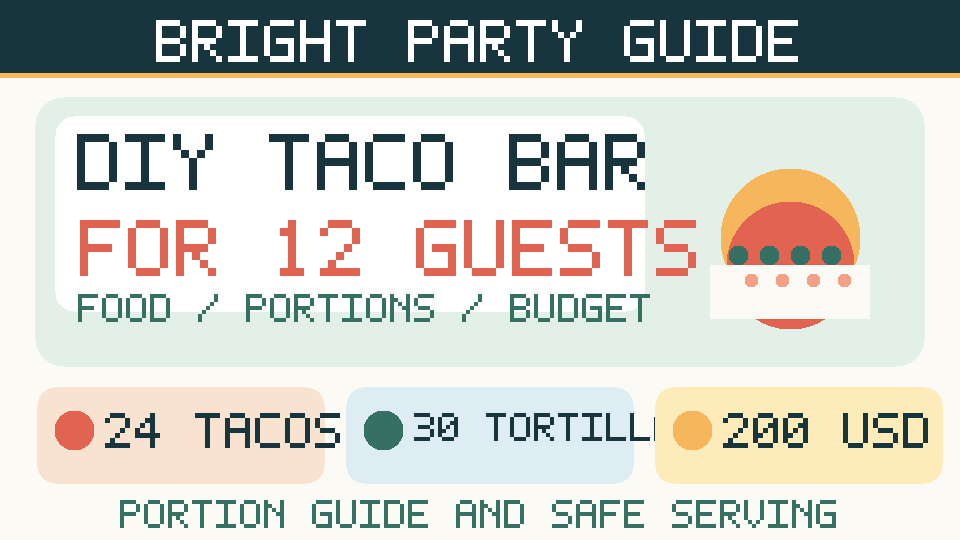
For a simple starting example, use two tacos per person: 12 people × 2 = 24 tacos. Add six spare tortillas, so the sample shopping count is 30. This is a planning allowance—not a reliable prediction of appetite. For hungry adults or a long event you may need more; with substantial sides you may need less. Check tortilla size and package count. Keep unopened extras aside until needed to reduce food waste.
3. Estimate cooked fillings and choose a genuine second option
One sample is about 2 ounces of cooked filling per taco: 24 × 2 = 48 ounces, or roughly 3 pounds cooked filling across the menu. That is not the same as raw purchase weight; foods lose or gain moisture when prepared. Offer at least two clearly differentiated choices, for example properly cooked chicken and a seasoned bean-and-vegetable filling. If you expect vegetarian guests, provide enough of that filling for their actual number of planned tacos rather than treating it as an afterthought. Check seasoning and ingredients, especially prepared sauces.
4. Build a $200 sample host budget
The figures in the following table are fictional planning allowances for the entire host contribution, not observed U.S. supermarket prices. Actual prices vary with store, location and ingredient selection. If the projected grocery basket is higher, simplify extras first and adjust the menu instead of ignoring the reserve.
| Host expense | Hypothetical allowance |
|---|---|
| Tortillas | $18 |
| Two cooked filling options | $70 |
| Fresh toppings and vegetables | $35 |
| Salsa, sides and condiments | $22 |
| Nonalcoholic drinks | $20 |
| Serving supplies | $10 |
| Reserve | $25 |
| Illustrative host total | $200 |
5. Arrange three stations that do not trap guests in one line
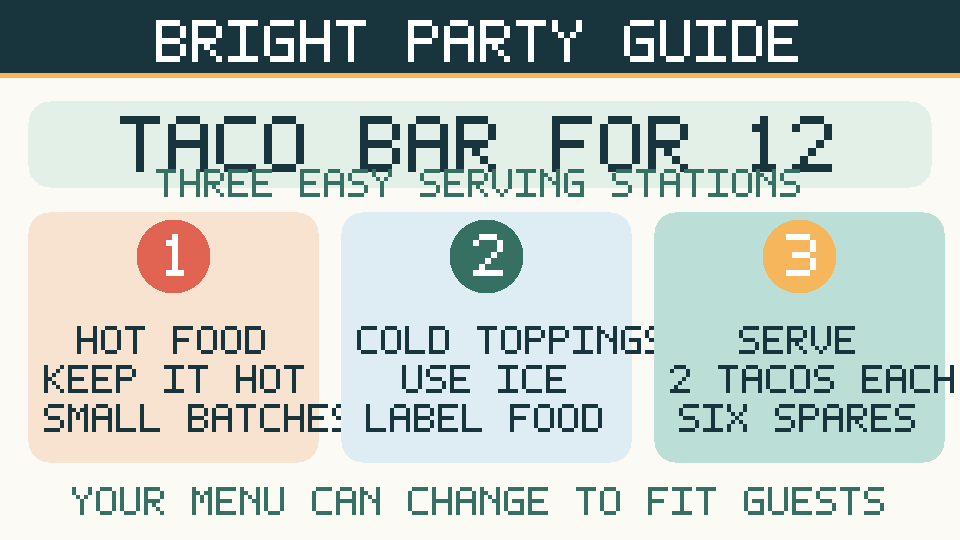
Start the line with tortillas and plates, then place safely held warm fillings, followed by chilled toppings and clearly labeled condiments. Put drinks on a separate counter where possible. Label each filling with its ingredients and potential allergens as accurately as possible. Place serving spoons beside each dish rather than expecting guests to share one. Keep an unobstructed path around the food table and avoid placing hot containers where people must lean across them.
6. Prepare ahead without turning the buffet into a safety risk
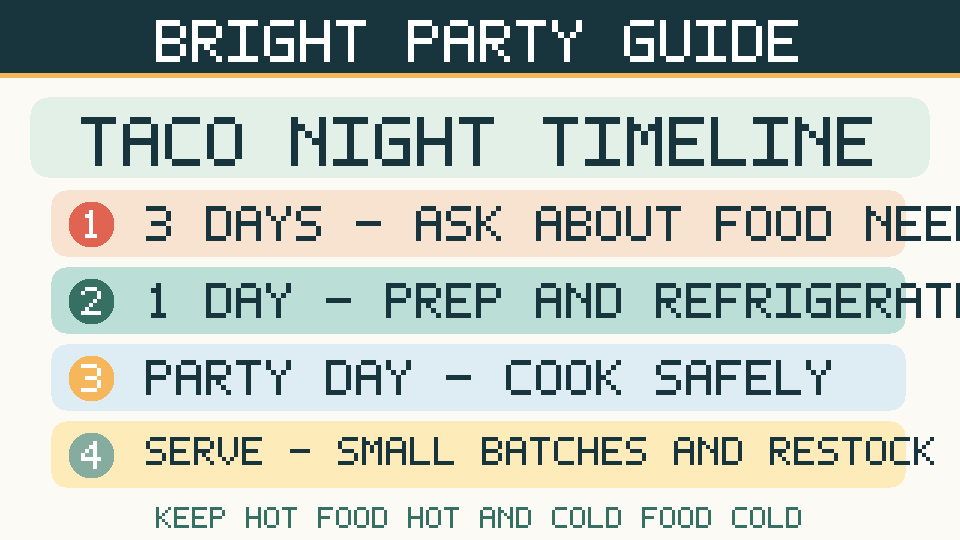
Three days before: collect RSVPs and dietary needs. The day before: purchase supplies and prepare any refrigerated items according to safe storage instructions. On party day: cook raw meats to the recommended safe internal temperature using a food thermometer; wash hands and keep raw foods separate from ready-to-eat toppings. Bring out small portions rather than the entire supply at once. Cold perishables should stay at 40°F or below and hot perishables at 140°F or above when holding for service, or be served within safe time limits. Never rely on how food looks to decide whether it is safe.
7. A realistic two-and-a-half-hour party outline
0:00–0:20: arrivals, handwashing and drinks. 0:20–0:35: briefly explain the filling options and buffet flow. 0:35–1:30: serve the tacos, refilling small dishes from properly stored supplies. 1:30–2:10: relaxed conversations and a simple optional group activity. 2:10–2:30: clear perishables, pack safe leftovers and conclude. If the dinner begins later than planned, adjust holding and refrigeration instead of leaving perishable items on the counter until everyone arrives.
8. Sample invitation that makes the menu clear
Join us for a relaxed make-your-own taco night at home! Date: [date]. Time: [start–finish]. Please RSVP by [date] with the number attending, and let us know privately about food allergies, dietary preferences or access needs. We will have two fillings, toppings and nonalcoholic drinks. The host is supplying the food, so there is no need to bring anything. We look forward to seeing you.
9. When the guest count changes
If two invitees cancel before shopping, the base calculation becomes 10 people × 2 = 20 planned tacos, plus whichever reserve makes sense. If two additional guests confirm, 14 × 2 = 28 planned tacos; consider a package count of at least 34 with six spares. Recalculate fillings based on the number of tacos, not just the number of invitations. Do not put leftover cooked food back into long storage if its time and temperature history is uncertain.
10. Cleanup, leftovers and budget discipline
Provide a clearly visible trash and recycling station away from the buffet. Label clean reusable containers in advance so safe leftovers can be refrigerated promptly. Avoid holding perishable food at room temperature for more than two hours, or one hour at temperatures above 90°F. Give serving utensils and shared surfaces a thorough wash, and check that no food has been left in warm cookware. For the budget, record actual checkout amounts against each allowance to make the next gathering easier to plan.
Frequently asked questions
Is two tacos per person enough? It is a simple starting assumption, not a guarantee; adjust for guests, tortilla size and the rest of the menu. How many tortillas should I buy for twelve? Thirty is a sample with six extras based on two per person. Is a fully vegetarian taco bar easier? It can simplify one part of the menu, but proper food storage and ingredient checks still matter. Can I leave toppings out all evening? Perishable toppings require temperature control or adherence to time limits.
The Bright Party Guide difference
This plan gives guests a countable food formula, a shopping budget with reserve, ingredient transparency and a safe serving workflow instead of only attractive party photographs. Customize the details to your real kitchen capacity, refrigeration space and the people attending. The planning example does not substitute for food-safety instructions on ingredient packages or advice from local authorities.
Copy-and-use host checklist
- Confirm 12 attendees and dietary information
- Plan 24 tacos plus 6 spare tortillas as a starting example
- Calculate cooked filling amounts based on menu choices
- Separate warm fillings, cold toppings and drinks
- Label ingredients honestly and use clean serving utensils
- Follow food thermometer, refrigeration and holding guidance
- Record spending and store safe leftovers promptly
Sources and further planning tools
Official reference: FoodSafety.gov: Four Steps to Food Safety; FoodSafety.gov: Game Day Food Safety Tips. Use the source guidance for safety and plant care; local conditions and regulations may differ.
Explore related guides: Thanksgiving potluck coordination; Party budget worksheet; RSVP tracker. New to hosting? Start Here and browse our Party Guides.
Editorial and illustration note: The planning examples, prices, quantities and timing are hypothetical and should be adjusted to actual guests and local conditions. Illustrative diagrams are original planning artwork, not documentary photos of a real party. Article prepared October 11, 2026.

