
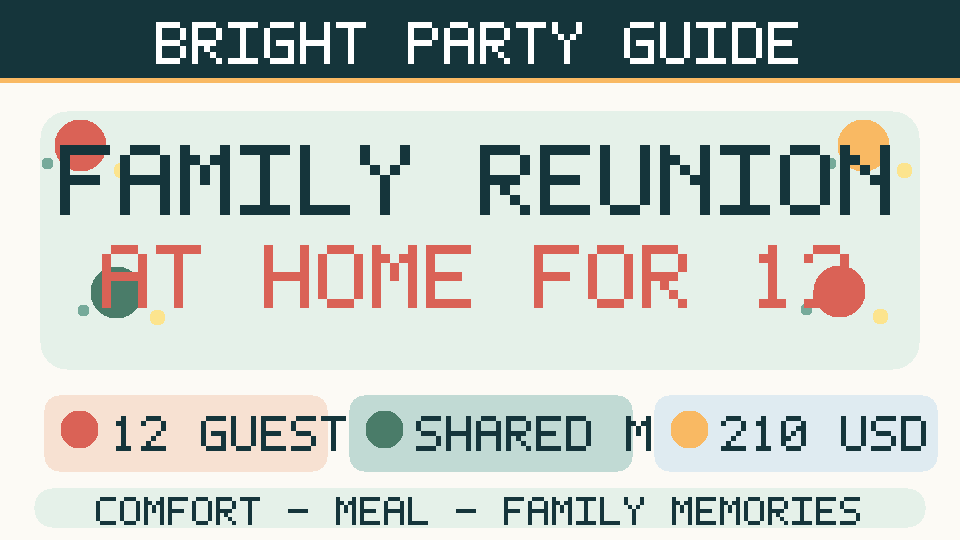
A family reunion at home should make it easier for relatives to spend time together, not turn one person into a full-service caterer. This guide is designed for a small U.S. family reunion of twelve people in total, including any hosts who will attend. It puts guest comfort, shared meal coordination and permission-based memory activities ahead of expensive decorations. The worked example assumes the host contributes food and basic supplies while relatives may volunteer to bring other dishes, but nobody is required to spend money.
Agree on the purpose and attendance first
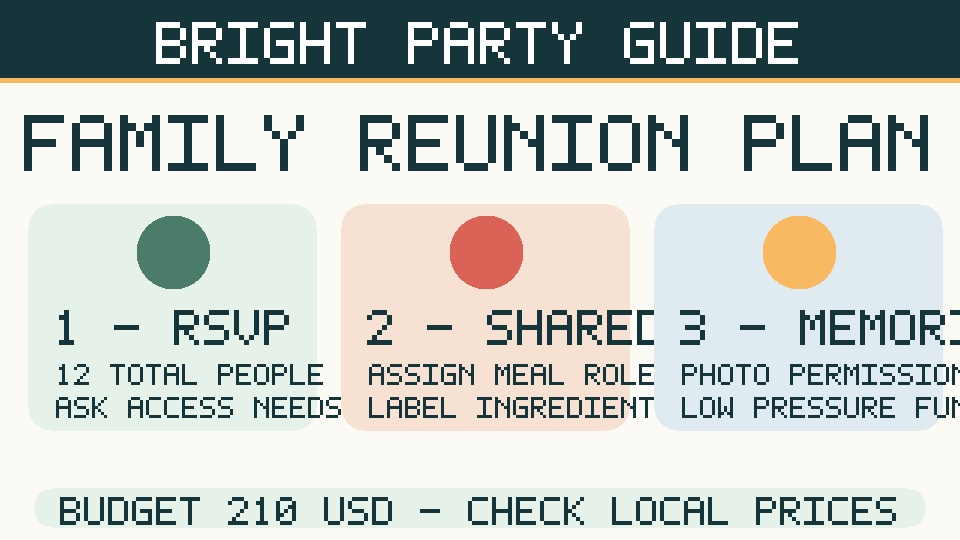
Before choosing a menu, ask what relatives would most enjoy: catching up quietly, sharing photos, celebrating a family milestone or introducing younger generations. Use a private RSVP list showing names, the number in each household and whether each person needs a seat or accommodation. Twelve invitations do not mean twelve confirmed attendees. Ask whether transportation, step-free access, a place to rest, or seating near a particular relative would help. Let people decline or leave early without pressure.
Make a seating map that suits the actual room
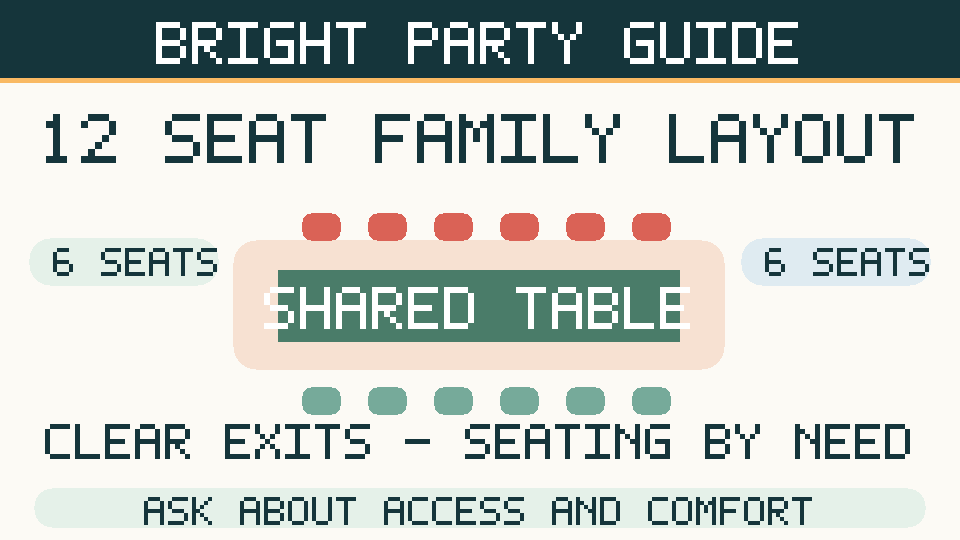
For an illustrative twelve-seat plan, imagine a long dining table with six places on each side, but do not force that shape if the room is narrow. Two smaller tables or several conversation clusters may work better. Leave a clear route to the bathroom, food table and exit. Provide sturdy chairs rather than making floor cushions the only option. Avoid seating children near unsecured hot food or fragile décor. Invite people to choose preferred seats instead of imposing family hierarchies.
Coordinate a shared meal without duplication
The host can send one simple sign-up sheet: main dish or host contribution, vegetable or salad, starchy side, dessert, beverages and serving supplies. Record how many portions each offering is intended to cover, whether refrigeration is required and whether it contains major allergens. One relative bringing a salad does not replace a complete meal plan. Ask what participants are comfortable contributing and provide a gracious ‘no need to bring anything’ option. Keep the host responsible for water and the final serving plan.
Illustrative host budget for twelve
This is an example host-only budget in U.S. dollars, not a live grocery quote. Guests’ optional food expenses, rental fees and travel costs are outside the table. Use current prices from your own stores and include a cushion for missing supplies.
| Host budget category | Illustrative allowance |
|---|---|
| Host main dish or contribution | $80 |
| Nonalcoholic drinks and ice | $30 |
| Dessert | $32 |
| Serving and cleanup supplies | $20 |
| Printed memory cards and pens | $12 |
| Reserve | $36 |
| Illustrative host total | $210 |
Food safety for a multigenerational meal
Ask about allergies and relevant food needs privately before planning the meal, and label dishes honestly. Use separate serving utensils where practical and do not promise an allergen-free kitchen without verified controls. FoodSafety.gov advises keeping perishable cold food at 40°F or below and hot food at 140°F or above, and not leaving perishables at room temperature for more than two hours, or one hour when above 90°F. Bring out small servings, replenish from safe storage and use a thermometer when required by the food being cooked. Do not leave uncooked or hot items unattended near children.
Set a quiet memory corner rather than a crowded program
Create one optional table with blank memory cards, a few family photos supplied with permission and pens. Put names and dates on the back only if the owners are comfortable sharing them. Invite relatives to write a favorite recipe, memory or question for the next generation. Nobody must make a speech or be recorded. A person who prefers to listen still participates. If a sensitive story comes up, allow people to redirect the conversation.
Photo permission and respectful sharing
Before taking group photographs, ask who is comfortable being photographed. Confirm separately before posting pictures of children, location details or private family history online. Consider sharing digital copies privately with family members who have agreed, and avoid tagging people without asking. If someone declines to be photographed, provide a seat outside the camera area. Do not assume that attendance is blanket consent to publishing images.
Copy-ready family invitation and RSVP note
We are planning a relaxed family get-together at our home on [date] from [start time] to [end time]. We expect about twelve people in total so we can make the space comfortable. Please reply by [RSVP date] with the number attending. Let us know privately about dietary or access needs. We’d love to share stories and a simple meal. Bringing food or gifts is completely optional. We will share the address and parking details directly with confirmed guests.
A two-week preparation calendar
Fourteen days before: agree on the purpose, contact list, likely count and budget limit. Ten days before: send invitations and note access needs. Seven days before: ask whether anyone wants to volunteer a meal item and record proposed portions. Three days before: confirm attendance, dish assignments and food storage. One day before: prepare any foods that can safely be refrigerated and stage seating. On the day: check serving temperatures, clear routes, set water and rest areas. The next day: return dishes and share photos only with permission.
A three-hour flow with plenty of unstructured time
0:00–0:30 welcome guests, offer water and show them seating and rest areas. 0:30–1:15 share the meal while keeping food at appropriate temperatures. 1:15–1:45 offer optional photo cards or a brief memory exchange. 1:45–2:40 leave room for smaller conversations and dessert. 2:40–3:00 conclude gradually, help with transport and collect borrowed dishes. If a guest needs to leave early, do not schedule all the meaningful moments at the very end.
Make the gathering easier for older and younger relatives
Do not assume relatives of the same age have the same preferences or abilities. Provide varied chair heights if available, space for mobility devices, a calm seating option away from loud conversations and water at reachable places. Ask caregivers what younger children will need rather than improvising games or food. Keep medications, cleaning chemicals, cords and sharp objects out of reach of children. Give visitors time to use the bathroom or take a break without calling attention to them.
After-party cleanup and follow-up
Label borrowed serving dishes with the owner’s permission, separate safe leftovers promptly and make a plan for disposal or donation only when appropriate and food-safe. Wipe tables and clear walkways before relatives who need help with transport leave. Send a short thank-you message without requesting gifts or public social posts. If family members choose to preserve the stories collected, agree on where the cards or images will be kept and who can view them.
Frequently asked questions
Should everyone bring a dish? No; a shared meal can be coordinated without turning contribution into a requirement. Do we need a family photographer? No; ordinary photos or no photos may be more comfortable. What if the table cannot seat twelve at once? Use two smaller tables or staggered meal seating only if it remains comfortable and accessible. What if relatives disagree about activities? Keep participation voluntary, choose low-pressure alternatives and prioritize time together over a fixed program.
How this guide differs from a general potluck checklist
A family reunion involves relationships, memories, accessibility and privacy as well as food. This plan therefore includes twelve-person RSVP accounting, a clear seating map, optional contributions, permission-aware photography and a calm event flow. The goal is to reduce work for the host while allowing guests to participate in the ways that feel right to them.
Useful related planning guides
Family picnic for twelve · Thanksgiving potluck coordinator · RSVP guest tracker · Start Here.
Safety and editorial notes
For verified cooking, refrigeration and cross-contamination principles, see FoodSafety.gov: Four Steps to Food Safety. This article is a practical planning example rather than a guarantee of suitable capacity, health outcomes, venue rules or local prices.
Illustration disclosure: Header and body diagrams are original illustrative planning graphics, not photographs documenting an actual event. All quoted budgets and serving scenarios are hypothetical; verify local prices, food labels and relevant rules before purchasing or hosting. Published October 11, 2026.

