
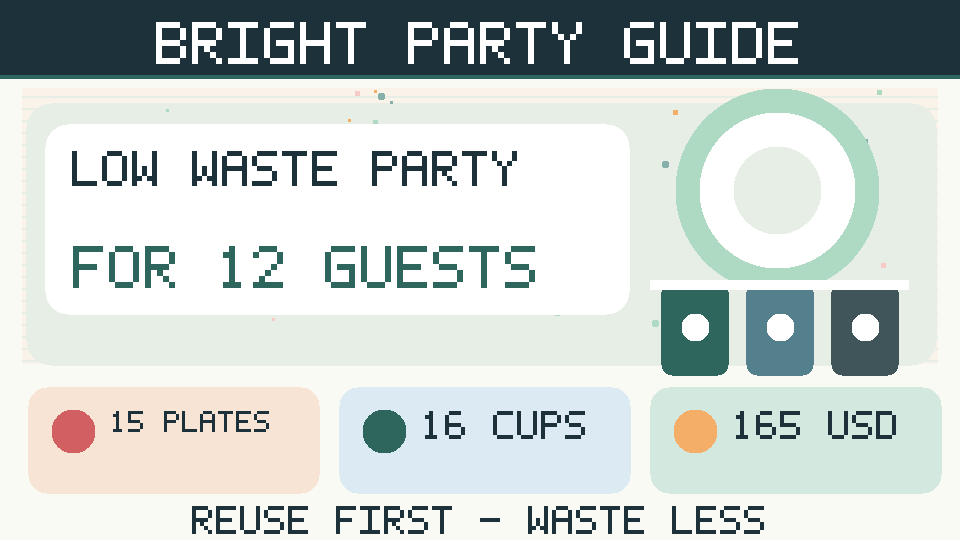
A low-waste gathering is not a competition to produce zero trash. A more realistic approach is to use the plates and glassware you already own, confirm your guest count before purchasing food, set up easy-to-understand collection points and store leftovers safely. This guide uses a twelve-person home gathering with a hypothetical $165 host budget. The benefit is a concrete worksheet and room plan, not a claim of certified environmental savings: local recycling systems, washing capacity and what is actually reused will determine the outcome.
Start with the real guest count and resources you already have
Confirm twelve attendees in total rather than counting only invitations sent. Check the number of safe, clean plates, cups, utensils and cloth napkins already available. Choose reusable items that fit the guest group, including any breakage or accessibility concerns. You do not need to buy a matching set; a mixed assortment is fine. If you have fewer than the target quantities, borrow compatible items from friends or use a practical lower-waste fallback. Buying twelve expensive new products solely for one evening can miss the point.
A simple calculator for reusable tableware
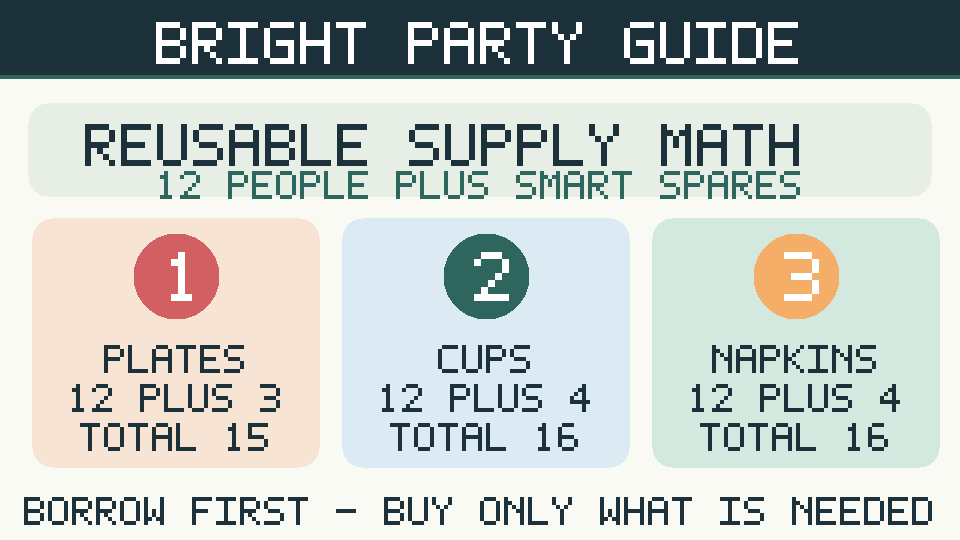
For twelve attendees, plan one usable plate per person and three spares: 12 + 3 = 15 plates. For drinking, allow twelve cups plus four spares for guest changes or breakage: 12 + 4 = 16 cups. Start with twelve sets of utensils plus three spare sets (15), and twelve washable napkins plus four extras (16). The numbers are hosting allowances, not official environmental benchmarks. For multiple courses or different drinks, adjust based on what can be washed and reused during the event.
Create the borrow-before-buy supply list
Make four columns: item, target amount, already owned, amount to borrow or otherwise source. Example: plates target 15, owned 10, need 5; cups target 16, owned 14, need 2; utensils target 15 sets, owned 15, need 0; cloth napkins target 16, owned 12, need 4. Ask guests privately if borrowing makes sense, but do not pressure them to bring their own items. Mark borrowed pieces for easy return, and check they are clean and safe for food use.
A hypothetical $165 budget that includes a reserve
These figures are a planning exercise, not current U.S. retail prices or measured waste savings. The example assumes the home already has most washable dishes. If reusable items must be purchased or rented, the extra cost may make the estimate unsuitable. Use local quotes and actual inventory; leave the reserve alone unless needed.
| Host budget item | Example allowance |
|---|---|
| Main food and vegetables | $72 |
| Nonalcoholic drinks | $28 |
| Dessert | $24 |
| Borrowed-item cleaning or supplies | $12 |
| Labels for waste stations | $5 |
| Reserve | $24 |
| Illustrative total | $165 |
Design a serving table that reduces food waste
Instead of opening all food at once, choose a modest menu with one substantial option, a vegetable or fruit side, dessert and water. Display small platters and replenish from safely stored food as people eat. Ask about allergies and preferences before shopping so avoidable portions are not prepared. Use reusable serving bowls and separate spoons. Consider labels to show the food type, not claims like ‘allergen-free’ unless that statement can be supported.
Two clear collection points beat ten confusing bins
Place a dirty-dishes return station near the sink, using stable trays and a container for utensils. Put a separate trash-and-recycling station where guests can see it but away from the food. Label bins using locally accepted items rather than a universal symbol that might cause wishful recycling. For example, whether plastic cups, compostable serviceware or food-soiled paper are accepted varies by local collector. Do not assume that biodegradable or compostable packaging belongs in every recycling or compost bin.
Use decoration you can reuse, not a new shopping list
A small vase of flowers, washable cloth, light strings already owned or a single reusable sign may be plenty. Skip unnecessary party favors and one-time balloon arches unless they are central to the celebration and can be reused. A digital invitation can avoid printing, but it is fine to provide paper details to anyone who needs them for access. Make reuse and guest comfort the goal, not a rigid rule that embarrasses people who bring packaged food.
Safely handle leftovers instead of only measuring trash
Food waste prevention must never encourage keeping food that has been held unsafely. Keep cold perishables at 40°F or below and hot food at 140°F or above when held for service. Generally, refrigerate perishable foods within two hours, or within one hour if ambient temperature exceeds 90°F, and follow recipe and ingredient-specific guidance. Use clean reusable containers where possible and label leftovers with the preparation date. Only offer leftovers to guests when food has been stored safely and they want to take some.
An easy two-week and event-day workflow
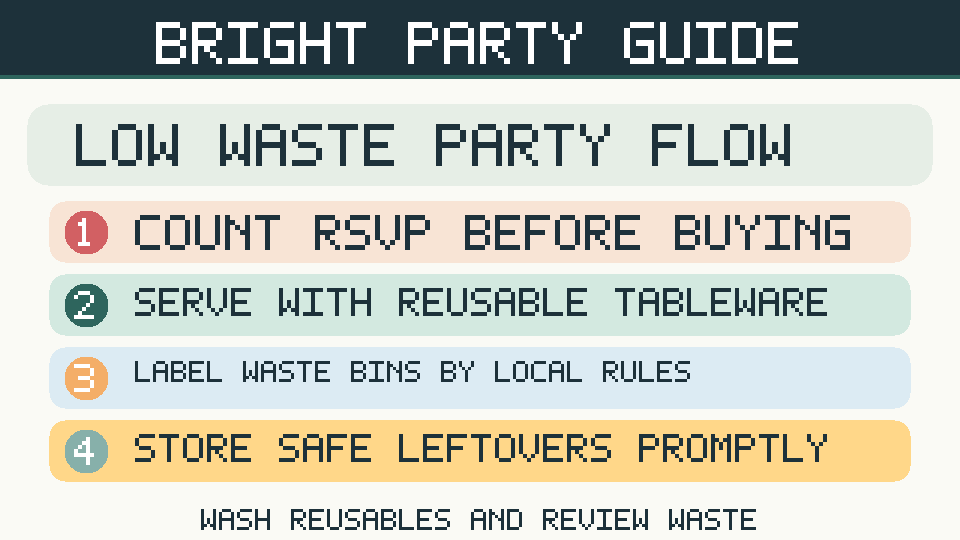
Two weeks ahead: set the guest count, location and menu format. One week ahead: inventory dishes and borrow missing pieces. Three days ahead: finalize RSVPs and buy food against the actual headcount. One day ahead: wash reusable items, label bins based on local rules and stage serving containers. Event day: begin with smaller food portions, refill safely and show guests where used dishes belong. Afterward: refrigerate eligible leftovers, run full dishwasher loads when practical, return borrowed items and note what was not used.
A copy-ready invitation that welcomes every guest
We are having a relaxed get-together at home on [date], [start–finish]. We’ll keep things simple with shared food, washable tableware and clearly labeled cleanup stations. No one needs to bring special supplies or make a purchase. Please RSVP by [date] and let us know privately about allergies or access needs. We would love to see you and will share the address with confirmed guests.
Estimate results without inventing environmental claims
After the party, write down how many guest settings were reused, how much prepared food remained, what was thrown away and what went into the actual recycling stream. Keep this as a private learning log. Don’t claim that the party ‘saved 90% of waste’ or ‘cut carbon emissions by half’ unless you have a credible measurement method and comparison. The useful outcome is knowing which supplies can be used again and which menu quantities should change next time.
Frequently asked questions
Is a low-waste party the same as zero-waste? No; it is about reducing avoidable purchases and disposables where practical. Do I need to buy reusable cups? Usually it is better to start with your existing supply and borrow if reasonable. Can every paper plate be recycled? No; local programs and contamination rules vary. Does a digital invitation guarantee a more sustainable event? It may reduce paper, but it does not measure the event’s overall impact. What if washing twelve place settings is difficult? Simplify the menu or make a sensible alternative plan rather than sacrificing hygiene or accessibility.
What makes this guide worth saving
The reusable supply math turns a general eco-friendly slogan into an actionable host checklist. The borrow-before-buy worksheet, realistic serving quantities, safe leftovers and local disposal rules make the advice useful beyond one party. The plan is adaptable, with no pressure on guests to buy products or accept unsupported environmental claims.
Copy-ready host checklist
- Confirm a 12-person headcount
- Count owned plates, cups, utensils and napkins
- Borrow only the actual shortages
- Serve food in small safe portions and label ingredients
- Make dish-return and locally valid waste stations visible
- Store eligible perishable leftovers promptly
- Log what was reused and avoid unsupported impact claims
Sources and related guides
Helpful official references: EPA: Zero-Waste Special Event Best Practices; US EPA: Reduce Waste at Home; FoodSafety.gov: Four Steps to Food Safety. Check current local rules and food or equipment labels before hosting.
Keep planning with Party budget worksheet; Book swap party for ten; RSVP headcount tracker. For first-time hosts, read Start Here or visit Party Guides.
Editorial disclosure: All budgets, inventories and schedules are illustrative planning scenarios, not documented events or current vendor quotes. The header and diagrams are original illustrative artwork, not documentary photographs. Adapt plans to real guest needs, equipment and applicable rules. Reviewed October 11, 2026.

